Exam Prep Strategies — Research-Backed Methods That Actually Work
Exam prep research: spacing vs cramming, practice exam value, sleep impact on performance, and evidence-based study schedules for finals.

Exam preparation is one of the most studied topics in cognitive psychology, yet most students approach it with techniques that contradict research findings. Pulling all-nighters, cramming material continuously without breaks, re-reading textbooks repeatedly — these are common but counterproductive habits. The research-supported approach combines distributed practice, active retrieval, adequate sleep, and structured practice exams.
This article uses Cepeda et al.’s spacing meta-analysis, Matthew Walker’s sleep research, Karpicke and Blunt’s retrieval practice studies, and Adam Grant’s stress-performance work to outline evidence-based exam prep strategies. Topics include why cramming fails, the critical importance of sleep, practice exam value, time-management approaches, and managing exam anxiety.
For complementary content, see active recall vs passive and Pomodoro Technique data.
Why cramming fails
Per Cepeda et al.’s 2006 meta-analysis covering 254 studies on spacing effects, distributed practice produces 50-200% better long-term retention than massed practice (cramming). The benefits compound with longer retention intervals — for material needed 1+ months later, spaced study dramatically outperforms cramming.
The mechanism: spaced practice creates multiple memory retrieval opportunities that strengthen long-term storage. Cramming creates strong but brittle short-term memory that fades quickly.
For finals covering semester-long material, this matters enormously. Material learned in the first month and reviewed periodically retains substantially. Material crammed in the final week reaches exam day in fragile state and often fails under stress.
When cramming works
Cramming isn’t always wrong. For:
Surface knowledge tests (recognition-based, simple factual recall): cramming can produce passing performance.
Material you won’t need long-term: if you’re certain you won’t reference this material again, cramming is acceptable. Rare in academic settings.
Time-constrained crises: missed weeks due to illness, emergency, etc. Cramming is suboptimal but sometimes necessary.
For typical student exam preparation, cramming should be a fallback, not a strategy.
The sleep imperative

Per Matthew Walker’s sleep research (Why We Sleep) and decades of memory consolidation studies, sleep is among the most important and underrated exam prep factors.
Memory consolidation during sleep: material learned during the day undergoes consolidation during sleep, especially REM and slow-wave phases. Without adequate sleep, the day’s learning fails to transition from short-term to long-term storage effectively.
Per Walker’s research, students who slept 8+ hours after studying retained approximately 40% more material than students who pulled all-nighters before exams. Sleep-deprived students showed cognitive performance comparable to legal-limit alcohol intoxication.
Practical implications:
Don’t pull all-nighters before exams: any short-term cramming gain is erased by cognitive impairment and lack of consolidation. Sleep 7-9 hours before exam day.
Sleep consistently during prep: irregular sleep disrupts memory consolidation. Maintain regular bedtime even during exam weeks.
Nap strategically: 20-30 minute naps can refresh focus without disrupting nighttime sleep.
Caffeine timing: avoid caffeine within 6-8 hours of bedtime. Stimulants persist longer than most students realize.
Practice exams as primary tool

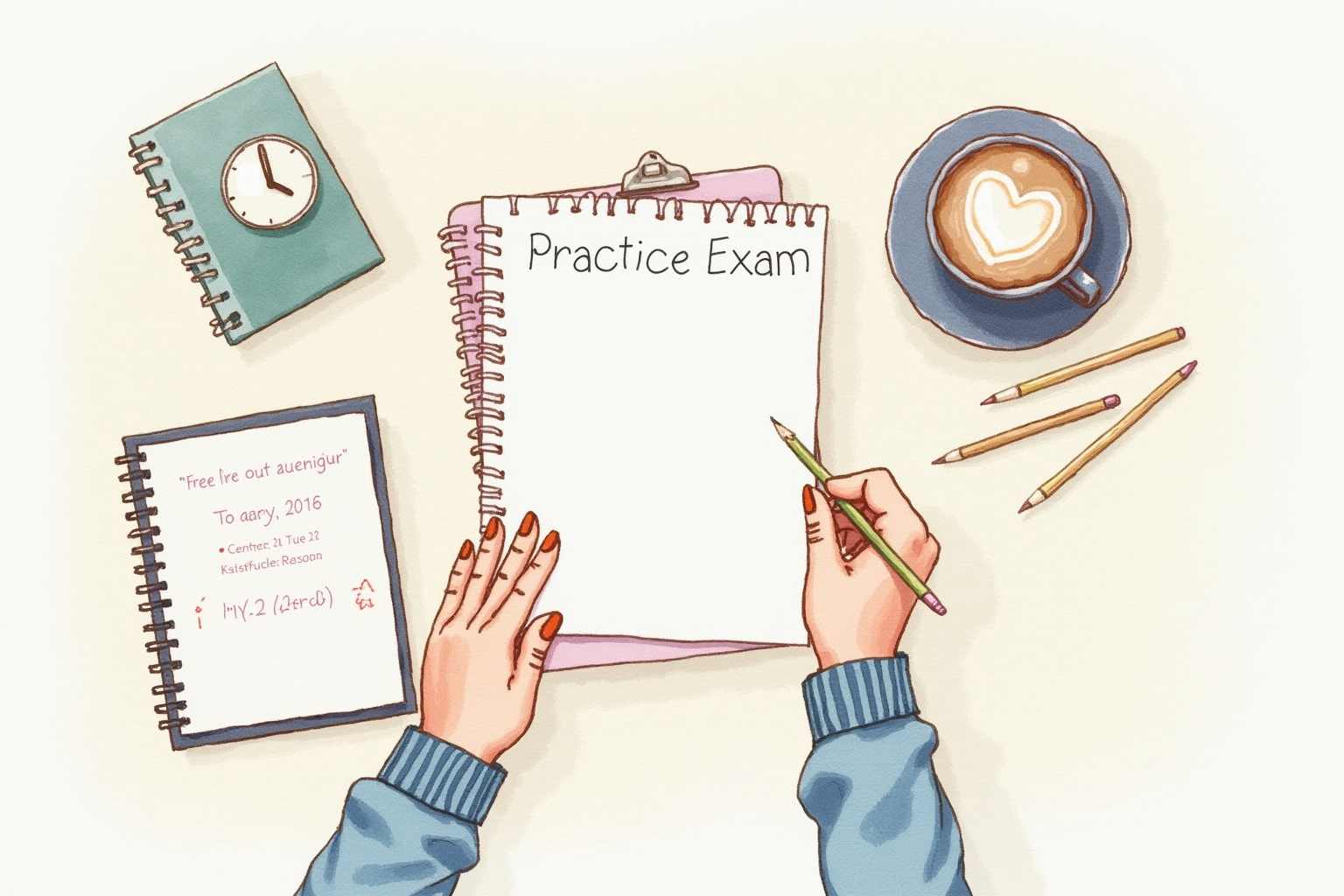
Per Karpicke and Blunt’s research, students who did practice exams outperformed students who did equivalent time content review by 50%+. The mechanism combines testing effect (active retrieval), gap identification (you discover what you don’t know), and test condition simulation (anxiety management, time management).
Where to find practice exams:
Textbook end-of-chapter problems: most textbooks have practice questions. Underutilized resource.
Past exam papers: many universities make past exams available. Professors often share old exams; check course resources or ask directly.
Course test banks: some textbooks include test banks separately. Check publisher websites or ask professors.
Online practice question banks: Quizlet, Brainscape, Anki community decks for many common subjects.
Study group practice: create exam-style questions and quiz each other. Generates active recall plus social motivation.
Practice exam strategy: take under timed conditions. Don’t look up answers during. Score honestly. Identify weak topics and focus content review on those areas.
Evidence-based study schedule
For a typical 3-month semester course with final exam covering all material:
Throughout semester (months 1-2): weekly review sessions (1-2 hours) reviewing past 2-3 weeks of material. Build cumulative understanding rather than just keeping up with new content.
1 month before exam: increase review frequency. Take first practice exam to baseline current knowledge.
3 weeks before exam: focus content review on weak topics identified by practice exam. Second practice exam.
2 weeks before exam: full timed practice exam. Identify remaining gaps. Continue spaced review of high-priority topics.
1 week before exam: third practice exam. Review weak areas only. Active recall sessions.
3-7 days before exam: maintenance review. Avoid new material. Prioritize sleep and stress management.
Day before exam: light review only. No new material. Get 8+ hours sleep. Avoid all-nighters.
Day of exam: light breakfast, brief review, arrive early.
This schedule prioritizes distributed practice over cramming. Total study hours might be lower than cram-heavy approaches but produce dramatically better outcomes.
Common mistakes
Per Pomerantz exam performance research and student survey data:
Studying with phone nearby: even silenced, phone presence reduces cognitive performance (per UT Austin research). Studies show 10-15% reduction in test performance. Put phone in another room during serious study.
Studying primarily in one location: per Bjork’s “desirable difficulties” research, varied study locations produce better retention (location-context isn’t a memory anchor). Mix library, home, café locations.
Highlighting and re-reading: low-utility techniques per Dunlosky et al. Replace with active recall.
Group study without structure: socializing labeled as studying is the dominant failure mode of study groups. Structure group sessions: quiz each other, explain concepts aloud, work practice problems separately then compare.
Skipping exercise during exam prep: physical activity supports cognitive function and stress management. Even 30 minutes of walking maintains benefits.
Excessive caffeine: amplifies anxiety, disrupts sleep, doesn’t replace adequate rest. Moderate amounts help focus; excessive amounts hurt performance.
Managing exam anxiety
Per APA research, 16-20% of students experience significant exam anxiety. Evidence-based interventions:
Exposure through practice testing: simulate exam conditions repeatedly. Anxiety habituates with exposure.
Reframing arousal: per Adam Grant’s research, interpret physiological arousal (racing heart, nervous energy) as helpful focus rather than threat. Tell yourself “I’m excited and energized” rather than “I’m panicking.”
Writing exercise: per Stanford research, 5-10 minute writing exercise about exam-related anxieties before the exam reduces underperformance by 5-10%. Counterintuitive but research-supported.
Adequate sleep: anxiety is amplified by sleep deprivation. Sleep is anti-anxiety intervention.
Physical activity: exercise produces measurable anxiety reduction.
Avoiding stimulant overload: excessive caffeine amplifies anxiety. Switch to lower doses during exam weeks if you notice anxiety increasing.
For severe anxiety, university counseling services offer effective cognitive-behavioral therapy.
Day-of-exam protocol
The morning of the exam:
Sleep until natural wake within reasonable schedule: don’t set 4 AM alarm to cram. Sleep is more valuable.
Light breakfast: protein + complex carbs. Avoid heavy meals or unfamiliar foods. Don’t skip eating — low blood sugar impairs cognition.
Brief review only: 15-30 minutes max. Review your own summary notes, not new material. Building confidence rather than learning content.
Arrive 10-15 minutes early: reduces rush stress. Familiarize with exam environment if unfamiliar.
Bring materials checklist: ID, pencils/pens, calculator if needed, water, snacks if allowed.
Manage immediate pre-exam anxiety: deep breathing, brief writing exercise, positive reframing.
During exam: read all questions first, allocate time per question, do easier questions first to build confidence, watch the clock, leave time for review.
Bottom line
Evidence-based exam preparation differs significantly from typical student behavior. The research-supported approach:
Distribute practice over time rather than cramming.
Practice exams as primary tool rather than content re-review.
Active recall rather than re-reading or highlighting.
Prioritize sleep over additional cramming hours.
Vary study locations and methods for better retention.
Manage anxiety actively through exposure, reframing, and physiological care.
The biggest single change for most students: replace 50%+ of re-reading time with practice testing. The retention difference is dramatic.
For complementary reading, see active recall vs passive, Pomodoro Technique data, and the study methods category.